
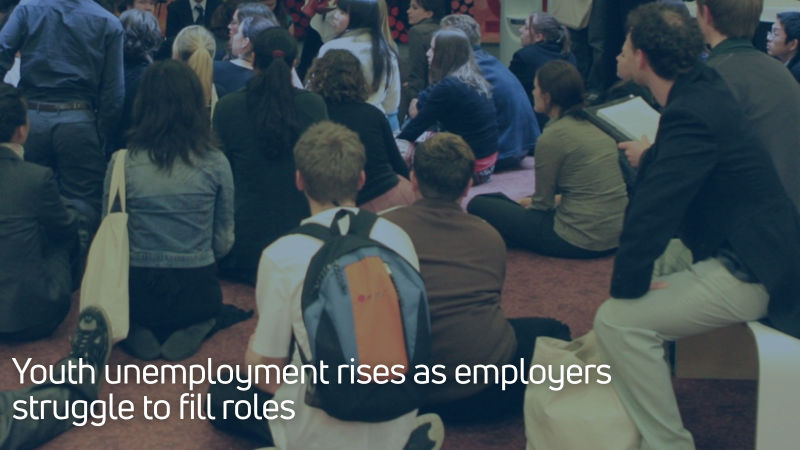
Youth unemployment rises as employers struggle to fill roles
Published: 05.08.2025
Bannerton PR
Updated / Wednesday 6th August, 2025
Youth unemployment rises as employers struggle to fill roles
Employment and Recruitment Federation urges focus on school-leaver pathways and early-career opportunities as jobs data shows growing disconnect
Despite Ireland reaching a record 2.81 million people in employment and maintaining a low 4.0% unemployment rate, the latest Labour Market Monitor from the Employment and Recruitment Federation (ERF) reveals a persistent and growing problem: young people are being left behind.
The youth unemployment rate rose to 10.7% in June, an 8.5% increase year-on-year, even as employers report serious difficulties filling roles across core industries. That means more than one in ten young people aged 15 to 24 are out of work, a rate more than twice the national average.
We have employers urgently looking for skilled people, and yet thousands of young workers remain locked out, said Siobhán Kinsella, President of the ERF. The system simply isn’t working for early-career jobseekers, particularly those not progressing through college.
The Q2 ERF report, compiled by Ipsos B&A, shows a labour market that is tight but uneven:
- 83% of employers report difficulty sourcing candidates with the right skills
- Permanent and contract hiring dipped in April and May before stabilising in June
- Some member firms reported increased use of temporary placements for project needs, though national data shows overall agency employment has declined year-on-year
- Structured entry-level roles remain limited, particularly for school-leavers entering directly into the workforce
While university graduates continue to enjoy high post-graduation employment rates, young people leaving school after the Leaving Cert face fewer structured options. Internships for non-graduates remain scarce, and vocational transitions into work are underdeveloped.
We’re not building the bridges we need between school and the workforce, Kinsella added. Without targeted apprenticeships, structured placements, and clearer entry routes, we risk deepening inequality in what is supposed to be a full-employment economy.
The ERF has developed its own apprenticeship model with the National College of Ireland, offering a Level 8 degree in Recruitment Practice for school leavers and those already working in the sector. However, more widespread initiatives are needed to support young people transitioning from school to sustainable employment.
With Budget 2026 consultations underway, the ERF is calling for urgent government focus on:
- Investment in school-to-work transition programmes
- Expansion of apprenticeships and work-based training, including in emerging sectors
- Support structures for under-25s who are unemployed or at risk of long-term labour market exclusion
Youth unemployment isn’t just a lagging indicator. It’s a sign that we’re failing to match potential to opportunity, said Kinsella. This Budget is a chance to close that gap.
For Information:
SHARON BANNERTON ¦ Managing Director, BANNERTON ¦ Mobile: + 353 87 673 1100 ¦ Email: Sharon@BANNERTON.ie
Editors Notes
The Q2 2025 Labour Market Monitor was commissioned by the Employment and Recruitment Federation (ERF) and compiled by independent research agency Ipsos B&A. Findings are based on monthly online surveys conducted during April, May and June 2025, with input from over 650 recruitment firms across Ireland. The report tracks hiring activity, salary trends, and market sentiment across permanent, contract, and temporary roles.
Ipsos B&A adheres to the Data Protection Act 2018 and is fully compliant with GDPR. All results are reviewed in aggregate only.
The Employment & Recruitment Federation is a voluntary organisation set up to establish and maintain standards and codes of practice for the recruitment industry.
Representing over 200 member companies throughout Ireland, the ERF develops and promotes education and training, and provides information and advice on the sector, as well as members services such as vetting, and lobbying on policy and industry issues impacting the labour market.